
While the Government says they are open to continuing negotiations, but on the condition that an increase in wages for workers in the public and private sectors is agreed upon, employers are proposing to extend the existing general collective agreement for a longer period. Due to the failure to reach an agreement, the Union of Free Trade Unions organized a protest in front of the government, demanding that a new General Collective Agreement with increased coefficients for all employees be signed within 15 days at the latest, otherwise they announce the radicalization of the protest.
After no agreement was reached since the end of last year to increase the calculated value of wages, which would mean a 10 percent increase in wages for more than 100,000 workers from the Union of Free Trade Unions, they organized a protest in front of the Government. From the rally called "Together for 100", they announced that there is money in the budget to increase the wages of all workers in the public and private sectors.
Srđa Keković from the Union of Free Trade Unions says that they are calling on the Government to respect the social partners as soon as possible and no later than within 15 days, continue the social dialogue with the social partners, and conclude a new general collective agreement with higher job complexity coefficients and higher labor costs.
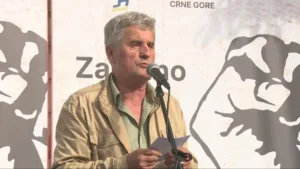
"If our call from the government is not met with understanding, we will be forced to continue our fight, but with more radical stances," said Keković.
The Government, on the other hand, claims that they are in favor of increasing the salaries of employees in the public and private sectors, but that they had the consent of the Union but not of the employers.
Minister of Labor Naida Nišić says that the Government's position was that an increase cannot be made through the calculation value of the coefficient that would absolutely only affect the public sector, without any increase in the private sector.
However, employers explain that in the negotiations so far, they have reached an agreement with the Union to increase the salaries of all employees, but that this model did not suit the Government.
Filip Lazović from the Employers' Union states that reducing the gap between the basic salary, which is obtained by the product of the calculation value of the coefficient and the job complexity coefficient, and what is the minimum salary prescribed by the Labor Law, namely the two minimums: 600 and 800 euros.
"That is what the Employers' Union was willing to have as a compromise with the social partners. Such an increase, for some reason, did not suit the Government," Lazović said.
While the Union is announcing a radicalization of the protests if no agreement is reached, the employers are demanding an extension of the existing general collective agreement, and the Government expects negotiations to continue.
"Negotiations will absolutely continue when it comes to the general collective agreement, and this situation absolutely does not mean that there will be no social dialogue on this issue in the coming period," said Nišić.
"What we have already proposed is that the existing General Collective Agreement be extended for a certain period of time and that during that period we see whether it is possible to find a solution that would mean amending that agreement," says Lazović.
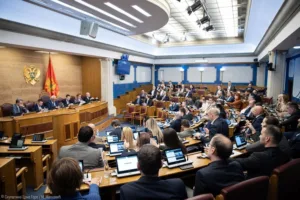
Due to the failure to reach an agreement, but also the importance of the General Collective Agreement for workers' rights, European Union MP Boris Mugoša initiated a control hearing of the line ministers in charge of social dialogue and finance, Minister Naida Nišić and Minister Novica Vuković.