
It warns that this opportunity must not be lost due to political divisions and suggests the formation of a joint body of the government and opposition as a possible solution. It also believes that the mediation of the European Commission could help achieve the necessary compromise by autumn.
Membership of Montenegro in the European Union is more realistic than ever, assesses Professor Đurović and reminds that the European doors are not open.
Unconditional key conditions remain the rule of law, constitutional changes, and appointments in the judiciary and other institutions.
„The political decision is up to Brussels, but currently, the most important thing is what is happening in Montenegro, along with the technical part of the negotiations, where things are going quite well. We also have a political framework that implies political dialogue and that key decisions are made in our parliament, voting on constitutional changes and conducting elections and appointments,“ says Đurović.
The issue of constitutional changes, around which there is still no political agreement, should be completed by the end of July, emphasizes Đurović.
„July is the month when these constitutional changes should be completed, but I wouldn’t be surprised if it gets pushed back a few months. Generally, September is already some kind of final deadline. There is an institute for extraordinary sessions, and this is simply a state interest. I think it is necessary to form some kind of joint body between the coalition of ruling parties and the opposition to reach a mutually acceptable way for the Assembly to function at full capacity and to fulfill European obligations,“ emphasizes Đurović.
It warns that we must not allow divisions that are not essential to the future of the state to stop us at the very end.
„A compromise must be found, we must sit down together. Perhaps we need the European Commission for that, but in any case, it must be done by autumn,“ Đurović conveys.
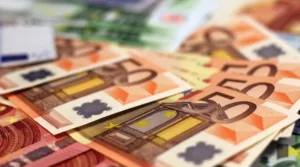
A political agreement is also important due to European money. Montenegro, it emphasizes, has so far drawn around 90 million euros from the Growth Plan for the Western Balkans, and there is a possibility of receiving additional funds that Serbia and Bosnia and Herzegovina have not utilized.
„Montenegro has a chance to draw even more than its 383 million. But so far, we have not completed everything we needed to,“ highlights Đurović.
We are facing a very challenging but also stimulating moment as these are additional funds through pre-accession support, concluded Đurović.







Comments