His artistic practice of "flacking" involves carefully filling cracks in asphalt and damaged urban surfaces with fragments of ceramics, glass and stone, creating complex mosaics.
Such large-scale interventions appeared this morning at several locations in Nikšić. The visual language, precision of execution and characteristic use of materials point to the recognizable handwriting of the artist who has left his mark in the largest European and world cities over the past decade. The urban interventions of this author contribute to the transformation of the city and give new meaning to symbolic locations.
It is precisely this discreet, yet powerful poetics that makes Ememem's work relevant in the context of Nikšić, a city in the process of cultural transformation and preparation for the European Capital of Culture.
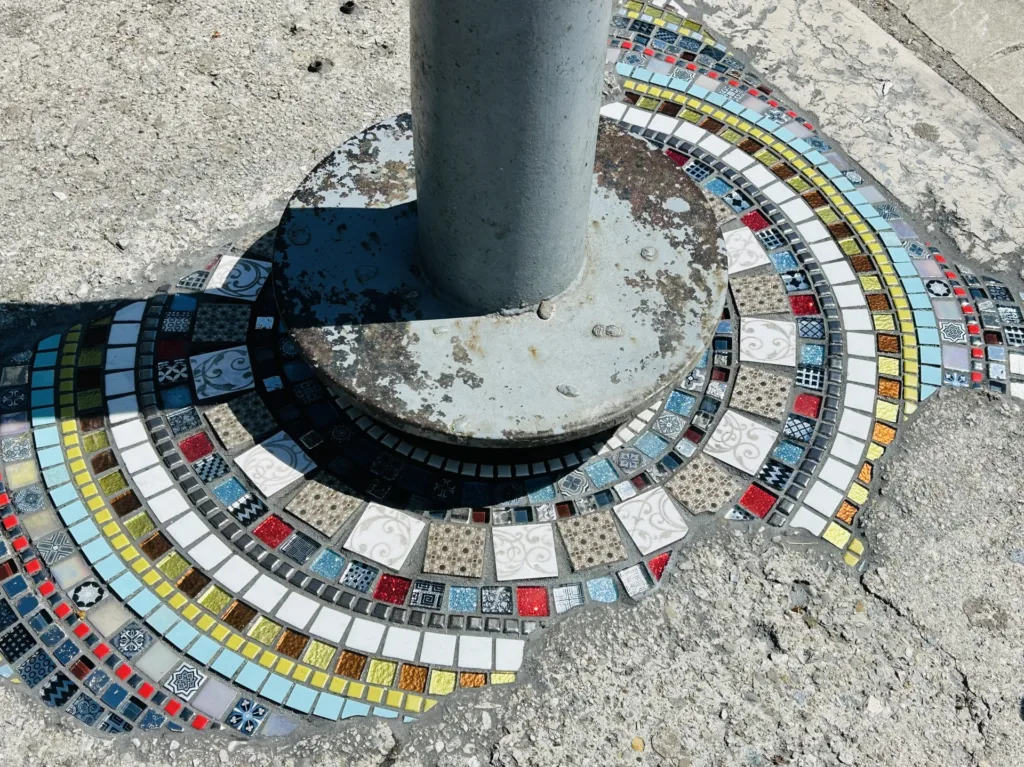
Photo: Municipality of Nikšić
What further deepens the public's interest in Ememem is the fact that nothing reliable is known about the author. Ememem does not give interviews and does not appear in public.
In a time when cities are often redefined through large-scale infrastructure and cultural projects, Ememem reminds us that the identity of a space is also built in detail – in the crack, the damage, the place that is easily overlooked. It is here, in these marginal zones, that his art finds meaning, transforming them into permanent signs of attention, care, and aesthetic intervention.
Ememem has left its mark in Nikšić at key cultural points in the city: across from King Nikola's Castle - a recently renovated historic building that houses the Nikšić Museum and Galleries, and which represents the very heart of Josip Slade's urban plan; at the pedestrian crossing between the Department Store and the plateau that will soon be reconstructed into Poet's Square, with a new monument to Njegoš; next to the old Police building that was officially handed over to Nikšić a few days ago by the Government of Montenegro for the purpose of implementing the European Capital of Culture 2030 project; and at other locations throughout the city.
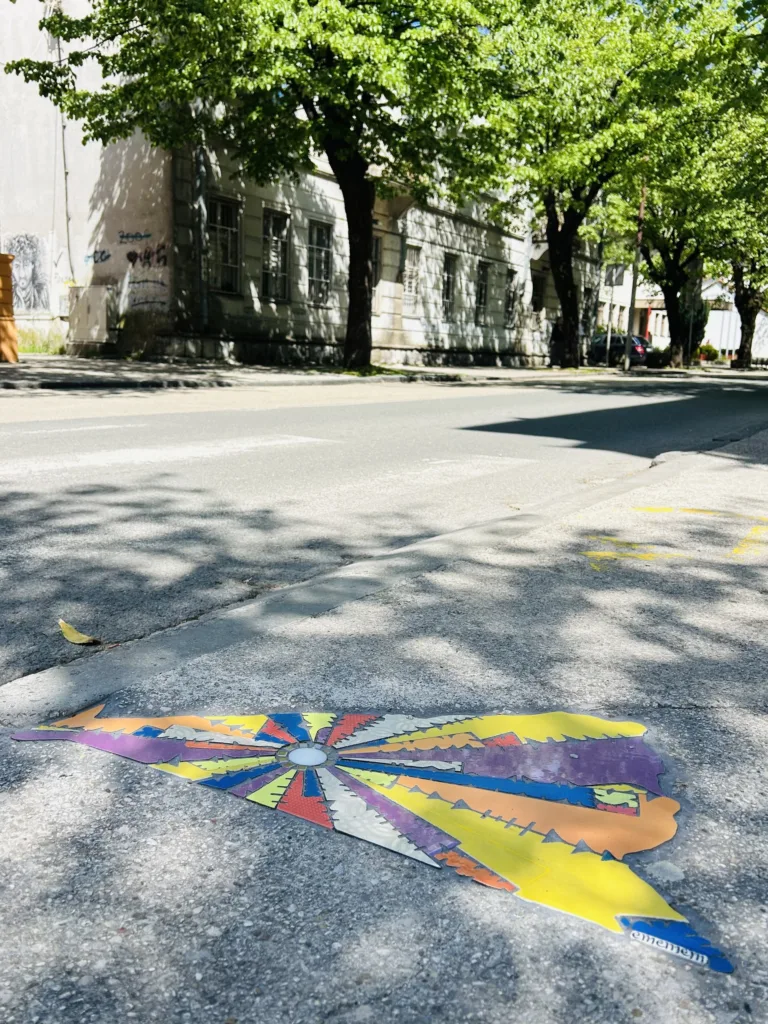
Photo: Municipality of Nikšić
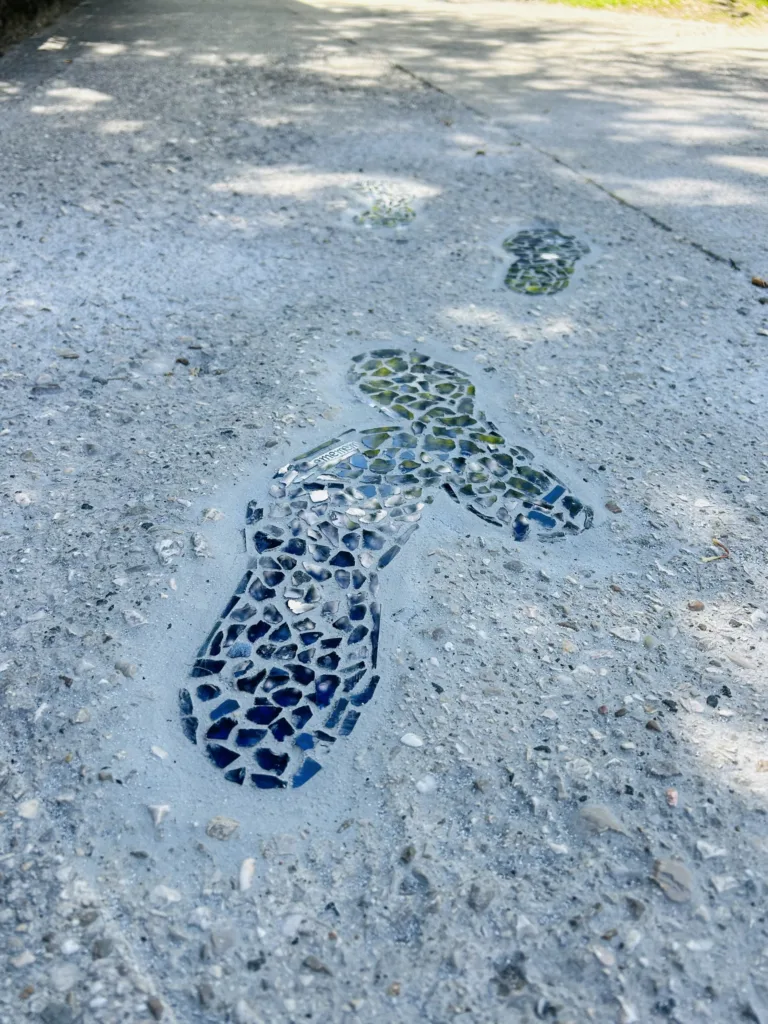
Some of the most striking works are interventions in the immediate vicinity of the House of Revolution – an old brutalist building whose construction was halted several decades ago, and which will be renovated in time for 2030. These interventions are made of iconic blue glass from the House of Revolution, which, scattered around the building, has been a symbol of the city's stagnation for years, and in this way is transformed into a powerful symbol of renewal.
Ememem was in Nikšić as part of the Nikšić 2030 European Capital of Culture program, announcing the Nikšić Urban Culture Festival, which will be held for the second time this year, contributing to the transformation of the city through urban interventions, murals, but also performances and musical performances in public spaces.
This is the first of the significant European and world names that will be guests of Nikšić in the coming period.