

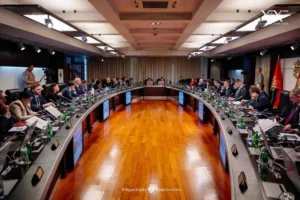
As stated, on Friday, February 27, 2026, the Parliament of Montenegro adopted the Law on Cross-Border Energy Infrastructure Projects, making Montenegro the first contracting party to the Energy Community to transpose Regulation (EU) 2022/869 on guidelines for trans-European energy infrastructure (TEN-E Regulation).
"This law is expected to further foster the integration of energy markets and energy systems in the Energy Community region, by establishing a framework for the development of trans-European energy infrastructure. Such cross-border infrastructure contributes to market connectivity, strengthening energy security and increasing competition, ultimately leading to more stable and affordable energy prices for households and businesses across the Energy Community region," the information reads.
Although the law transposes the key elements of the TEN-E framework, specific provisions relating to the permitting procedure, manual of procedures, public participation and transparency of cross-border energy infrastructure projects will be further defined by the Ministry within six months of its adoption.
"The Energy Community Secretariat, which supported Montenegro during the law-making process, welcomes this significant step forward and expects further progress by other contracting parties in transposing this regulation, as well as the successful implementation of the new framework in Montenegro," it added.
This, it is emphasized, represents the second major legislative step forward for Montenegro in just a month on the path towards deeper regional integration and integration with the European Union energy market. Earlier in February, Montenegro became the third contracting party to transpose the Electricity Market Integration Package.
“The Energy Community Secretariat formally launched the conformity assessment process on 3 March, initiating the technical assessment necessary to progress towards the integration of the electricity market with that of the European Union before accession, with subsequent verification by the European Commission. The Secretariat now has three months to complete this assessment,” it concludes.