Lieutenant General Steven Sklenka, deputy commandant for installations and logistics in the US Marine Corps, said during a military fair in Washington that China is no longer just a “roughly equal” opponent, but a real rival to the United States in almost all segments of global influence.
"There is no threat greater than the People's Republic of China. Don't listen to the nonsense that they are roughly equal. They are equal because they are catching up with us in almost every aspect of national power," Sklenka said.
He warned that a potential conflict with China would be far more complex and dangerous than the current operations against Iran. Although Iran is a much weaker power, it has demonstrated the ability to inflict serious damage on US forces and allies, including by launching drone and ballistic missile attacks on bases across the Middle East.
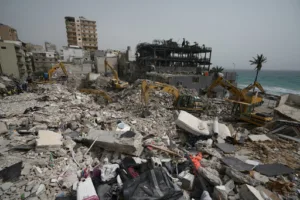

"We've only been in combat operations for a few months and we've already had casualties. Iran has launched hundreds of drones and missiles at our bases and allies," Sklenka said, adding that US military bases can no longer be seen as a safe backdrop, but as key battlegrounds.
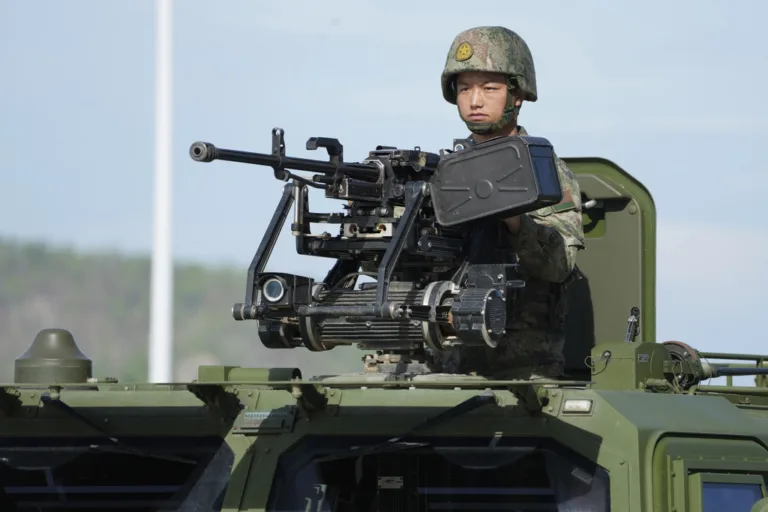
According to him, China has significantly greater economic, industrial and military capacities than Iran. He particularly emphasized the rapid development of China's military industry, including shipbuilding, weapons production and the development of advanced technologies.
"In the last 10 to 15 years, China's industrial base has surpassed our production. Their shipbuilding capacity is reportedly 230 times that of the US," he pointed out.
He also warned of the rapid expansion of China's nuclear arsenal, modernization of submarines, and development of warfare tactics based on artificial intelligence and drone swarms.
Speaking about Beijing's strategy, Sklenka stated that the Chinese leadership wants to assume global leadership and change the existing international order.
"Their intention is clear. They want to take the place of the leading power in the world and they don't want to share that with anyone," he said.
He particularly warned about the vulnerability of American military bases, emphasizing that future conflicts could begin with non-classical attacks.
"The first strike probably won't come in the form of missiles or bombers. It could be a cyberattack on the power grid, a disinformation campaign, or a drone attack inside the base itself," he explained.
He stressed that the US military must urgently strengthen infrastructure, improve defenses against drones, and ensure the resilience of communications and energy systems.
"Our bases must become combat platforms. We will not only fight from them, in many cases we will fight for them," Sklenka concluded.