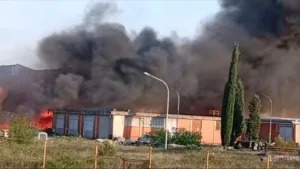

According to Ukrainian authorities, the pipeline was damaged in Russian attacks and has been out of service since then. The chairman of the board of the Ukrainian company Naftogaz, Serhiy Koretsky, informed the public about significant damage to the pipeline in the Lviv region.
Conflict
The Hungarian and Slovak prime ministers have argued that the pipeline has not been seriously damaged and that the oil shutdown is being used for political purposes. The fact that the Ukrainian leadership has not given a clear timeframe for the pipeline to be put back into operation suggests that they may be right. In response to the attempt to delay resolving the problem, Budapest has blocked a €90 billion EU loan, which was agreed at the beginning of the year.


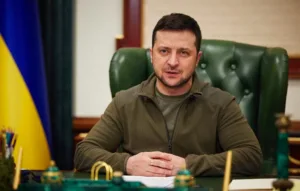
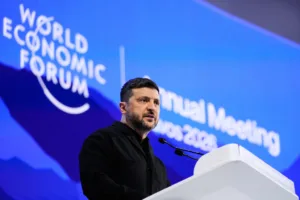
Shortly after, the diplomatic conflict between Kiev and Budapest escalated into a personal conflict between Prime Minister Orban and President Zelensky. Even before the whole situation escalated, President Zelensky had a statement in which he publicly criticized the Hungarian Prime Minister's policies.
On the other hand, Hungary and Slovakia are the European countries that have most publicly expressed skepticism about continuing to aid Ukraine and the intention to admit Ukraine into the EU. Prime Minister Orban has repeatedly expressed his dissatisfaction with European policy towards Ukraine, saying that it will drag Europe into a war with Russia.
The situation has deteriorated dramatically in recent months to the point that the Hungarian Prime Minister has ordered the deployment of the army and police around key energy facilities to prevent possible Ukrainian sabotage. Likewise, President Zelensky practically threatened the Hungarian Prime Minister with military force in a statement, which further alarmed the European public. The European Commission has also spoken out, declaring such rhetoric by the Ukrainian President “unacceptable.”
Election purposes
Prime Minister Orban is using this conflict as his main campaign trump card. Posters depicting the Ukrainian president in a negative context have been put up all over Hungary. There have also been posters showing the Ukrainian president, opposition leader Peter Magyar, and European Commission President Ursula von der Leyen together.
The Hungarian Prime Minister portrays the conflict with President Zelensky not as a personal conflict, but as an attack on Hungary and Hungarian interests. In this sense, the conflict has been instrumentalized to the utmost extent for the elections. Anti-Ukrainian rhetoric is the main topic, Ukraine is accused of interfering in the elections, etc. On the other hand, Kiev openly supports the change of government.
President Zelensky does not miss the opportunity to criticize the Hungarian Prime Minister, along with the aforementioned threats. Such a policy towards the current government in Hungary is justified by the fact that such a government is “closer” to Moscow than to Brussels and the EU. It is believed that the main opposition party Tisza, with its victory in the elections, would put Hungary “back on the saddle”, that is, on the European path. It is no secret that other European leaders want Orban to fall from power.
How Hungarian society will behave in the circumstances is difficult to predict. The fact is that President Zelensky has "rushed in" with an open threat to the Hungarian Prime Minister, that even Peter Magyar has come to the defense of the Hungarian Prime Minister, and besides, Hungary's energy supply is indeed an issue that should be above the political turmoil in the country.
In this sense, Ukraine's policy towards Prime Minister Orban could have the exact opposite effect. The foreign policy situation could play into Fidesz's hands, meaning that energy issues and potential external "threats" could outweigh any internal problems.
Orban's policies
In terms of global politics, the Hungarian Prime Minister remains the only figure in Europe who unites President Putin and President Trump. All European sovereignist “champions” have, after the latest escalation of the conflict in the Middle East and the US attack on Iran, distanced themselves from Washington’s policies. President Trump is no longer supported by Italian Prime Minister Meloni, Marine Le Pen, or the German AfD, only Prime Minister Orban remains. This somewhat shows all the shortcomings of Hungarian politics and the situation in which the current Hungarian government finds itself.
The Hungarian Prime Minister has remained someone who is opening cracks in European unity with the hope that this unity will eventually break down completely. The fact is that Hungary is dissatisfied with Europe's energy policy, often calling out Ukraine, but also Croatia lately, for supply problems.
Also, the fact is that Orban's policies are increasingly fueling instability in the region, from calling out Ukraine and Croatia for energy blackmail, to irredentist rhetoric and revision of history.
Destabilization of the region
However, it is clear that Hungary cannot militarily threaten any of its neighbors on its own. In a potential conflict with Ukraine, they would not fare well, as the Ukrainian army is currently the largest and strongest in Europe, with the exception of Russia. They are also surrounded by NATO countries, and apart from Serbia and possibly Slovakia under Prime Minister Fico, no one has much of an ear for that kind of policy.
Additionally, Hungary is strategically in a very unfavorable position. It has no access to the sea, is energy dependent on Ukraine and Croatia, and the entire Hungary is a plain without major natural obstacles, which makes it difficult to defend the country in the event of war.
Provided that Fidesz remains in power, the danger of further destabilization of the region could increase if Ukraine were to find itself in such trouble that its very existence as a state is practically threatened. Which means: the entry of the Russian army into Kiev, some kind of coup, civil war, or something else. In parallel, NATO would have to weaken to the point of practically disintegrating.
That may not even be an unrealistic option, but European countries would almost certainly very quickly form another military alliance without some NATO members, which would again put Hungary in an awkward military position.
What is possible, however, is that if Fidesz wins the elections, Hungary will continue to work to destabilize the region. The greatest risk for the regions then is not military in nature, but new attempts to destroy European unity in the medium or long term.
In this case, space would be opened for new "sovereignists" and populists who see the policy of sovereignty as a move closer to the policies of Moscow and Washington, and a move away from Brussels, which would ultimately lead to a greater crisis in Europe. Here, Prime Minister Orban could be the leader of such a policy, with partners in the countries in the region.
In other words, the greater danger in the region comes from "Hungarians" than from Hungarians.