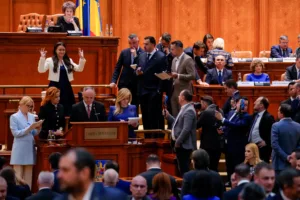

They believe that the silence of parliament represents a violation of basic legal principles, and that the procedure for selecting judges often depends more on political preferences than on expertise, which, they state, shows that the state is formally legal, but essentially politicized.
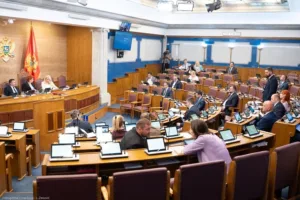
Although President Jakov Milatović has proposed two candidates for judges of the Constitutional Court, the Parliament has not scheduled a session for months for MPs to express their views on them. The problem was further highlighted by the President of the Constitutional Court, Snežana Armenko, who appealed for the Constitutional Court to be completed by June at the latest, before Montenegro enters the election year.

Amra Bajrović, legal advisor at the Human Rights Action, told our radio that completing the highest court instance is in the general interest and that there is no reason not to elect the candidates proposed by Milatović.
"The months-long postponement of the election of Constitutional Court judges shows a lack of political will and awareness of priorities. There is no justifiable reason not to elect the candidates proposed by the President, and their election is in the general interest. With the current six out of seven judges, one of whom is a female judge, performing her duties unconstitutionally, there is a real danger that important decisions will not be made due to a three-to-three split. This threatens legal certainty and trust in the institution that is supposed to protect constitutionally guaranteed rights," says Bajrović.
Lawyer Saša Vujović also warns that the work of the Constitutional Court without all seven judges violates the principle of legality and citizens' right to reasoned decisions.
"In such a situation, the principle of legality of work is violated first of all. Also, due to the situation that an even number of judges can block the court's decision, the right of citizens to a reasoned court decision, which sometimes cannot be made, has been violated, as was the case when the legality of the contract between Montenegro and the United Arab Emirates was being considered," says Vujović.
He believes that by not declaring its position on the candidates proposed by the president, parliament is violating the most basic legal principles.
"Probably before the election itself or before the decision after pressure from the European Union, they will probably choose that missing judge, but this shows that the procedure for electing a judge of the Constitutional Court is quite different from the criteria explained in the Law on the Constitutional Court, but rather the decision on who will be the judge is made based on some other type of preferences, not just professional and legal ones, which all shows that our state is only formally legal, but essentially politicized," Vujović assessed.
Bajrović also reminds that the European Commission has repeatedly criticized the slowness in renewing the staff of the Constitutional Court.
"Therefore, it is necessary for the Parliament to hold a session as soon as possible, elect both proposed candidates, and this is in the interest of citizens and especially European integration," said Bajrović.
When asked when the parliament will include on the agenda and schedule a debate on the proposals of the president of the state for the election of judges of the Constitutional Court from the legislative chamber, we did not receive an answer.