US official: US-Iran ceasefire came about due to approaching war powers deadline
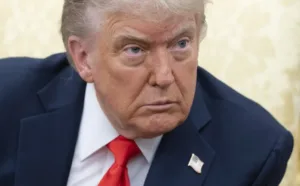
The ceasefire between the United States and Iran, which began on April 8, has "put an end" to hostilities between the two countries as the deadline approaches for US President Donald Trump to seek war powers from Congress, a senior Trump administration official said.


“For the purposes of the War Powers Resolution, the hostilities that began on Saturday, February 28, have ended,” the official told Reuters.
He said there had been no exchange of fire between US and Iranian forces since the ceasefire began. Analysts and congressional aides had previously said they expected Trump to notify Congress that he planned to extend the war powers by 30 days, or to ignore that deadline, with the administration arguing that the ceasefire marked the end of the conflict.
The 1973 law allows the president a 60-day period in which to end an action he initiated without congressional approval, and then must seek congressional approval or a 30-day extension based on “compelling military necessity” related to the security of the armed forces.
The Iran war began with airstrikes launched by Israel and the United States on February 28. Trump formally notified Congress of the conflict 48 hours later, triggering a 60-day deadline, which expires today.
US Defense Secretary Pete Hegseth told a Senate hearing on Thursday that he believed the 60-day countdown for launching military operations without congressional approval had been stopped during the ceasefire.
Under the US Constitution, only Congress, not the president, can declare war, but the restriction does not apply to operations that the administration states are short-term or in response to an imminent threat.
US President Donald Trump said that no one knows the status of negotiations with Iran except him and a few other people, suggesting that negotiations are progressing despite the appearance of a stalemate.
"Nobody knows what the negotiations are about except me and a few other people," Trump said in the Oval Office.
On the other hand, Iranian Foreign Minister Abbas Araqchi stressed that Tehran is ready for negotiations if Washington changes its behavior.
US Defense Secretary Pete Hegseth stressed that the Trump administration does not need to seek congressional approval to wage war against Iran, as the legal 60-day deadline has been suspended due to the ongoing ceasefire.
"Ultimately, I would defer to the White House and the White House's advice on that. However, we are currently in a ceasefire, which, as we understand it, means that that 60-day period is stopped or paused because of the ceasefire," Hegseth said in testimony before the Senate Armed Services Committee.
Ahead of the expiration of the 60-day period that the US Constitution allows the US president to use his war powers without Congressional approval, the US Senate has rejected the sixth Democratic proposal to limit President Trump's authority to wage war on Iran.
Iranian Supreme Leader Mojtaba Khamenei has said that the only place for Americans in the Persian Gulf is "at the bottom of its waters."
Iranian President Masoud Pazakhstani condemned the US naval blockade in the Strait of Hormuz, saying it represents a continuation of military action against Iran.
"What is being done under the guise of a naval blockade is an extension of military operations against a nation that is paying the price for its resistance and independence. The continuation of this repressive approach is intolerable," Pezeshkian said in a post on X.
UN Secretary-General Antonio Guterres said that disruptions in the Strait of Hormuz were "choking the global economy," warning of long-term economic problems even in a "best-case scenario."
Pakistan has opened land trade routes to Iran due to the blockade of the Strait of Hormuz.
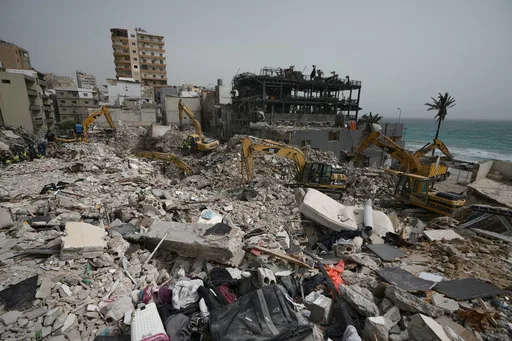
Despite the ceasefire, military operations in Lebanon continue. The Lebanese Ministry of Health announced that at least eight people were killed in Israeli attacks on the towns of Jibshit and Tul, located in the Nabatieh district in southern Lebanon.
On the other hand, Israel says one Israeli soldier was killed and another was slightly injured in a Hezbollah drone attack in southern Lebanon.