
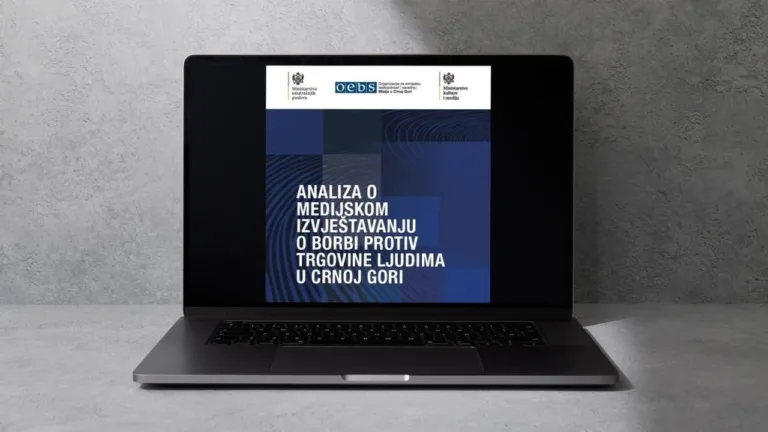
Although prevention and education topics are common, there is a lack of analysis of their effectiveness and accessibility to marginalized groups, while investigative journalism on this topic is very limited. Given the important informative, educational and preventive role of the media, reporting on the topic of human trafficking should be more based on an investigative approach, with a focus on the rights and voice of victims, without sensationalism and stigmatization.
These are some of the findings and recommendations of the Analysis of Media Reporting on Combating Human Trafficking in Montenegro, commissioned by the OSCE Mission to Montenegro for the Ministry of Internal Affairs and the Ministry of Culture and Media. The analysis covered 43 online media outlets registered in the Media Registry and covers the period from 1 January to 1 October 2025, with the aim of assessing reporting practices, the role of the media in raising awareness, and identifying key challenges.
During the analyzed period, a total of 455 articles on human trafficking were published. The largest number related to forced begging of children (194), followed by the general topic of human trafficking (143), sexual exploitation (64), child marriage (39), labor exploitation (13) and organ trafficking (2). Most of the content was in the form of short news items, while only four articles were of an investigative nature.


The report's recommendations include strengthening the investigative approach, greater focus on the rights and voice of victims, avoiding sensationalism, better contextualizing data, cooperation with the civil sector, and continuous education of journalists.
As such, reporting needs to shift from a predominantly informative approach to an analytical and empathetic approach, which places the human rights and dignity of victims at the center. Montenegro has demonstrated a strong commitment to combating trafficking in human beings by acceding to key international instruments, and media coverage of this problem is crucial for understanding its scale and severity.
"By reporting on cases of human trafficking, the media can encourage authorities to take action and allow victims' voices to be heard. Such reporting often leads to increased public awareness, stronger support for anti-trafficking measures, and better protection of victims," the report concludes.