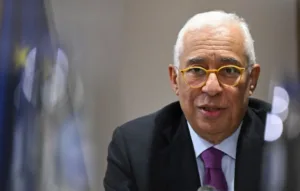
European Commission President Ursula von der Leyen echoed his statements at the nuclear energy summit in Paris.
The event – organised by the International Atomic Energy Agency (IAEA) – is taking place amid heightened tensions over global energy supplies as the US-Israeli war with Iran enters its second week.

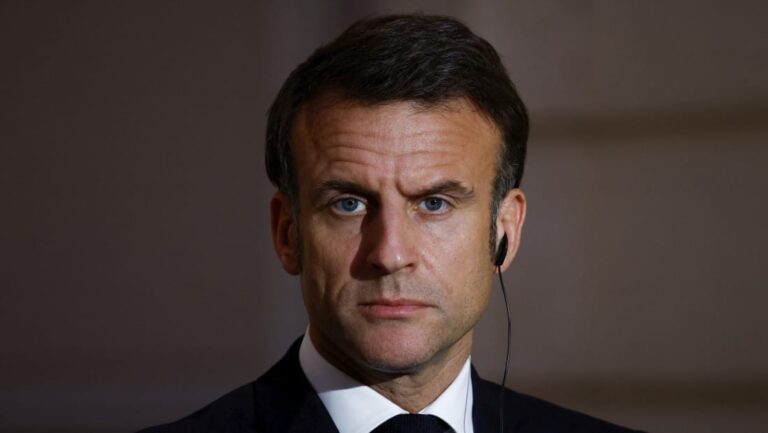
Macron said that civil nuclear energy helps ensure energy sovereignty. "Nuclear energy is essential for reconciling independence - and therefore energy sovereignty - with decarbonization and therefore carbon neutrality."
"We can see this in our current geopolitical context: when we become too dependent on hydrocarbons, they can become a tool of pressure or even destabilization," he added.
Strategic "mistake"
Von der Leyen said Europe's move away from civilian nuclear power had exposed the "vulnerability" of the continent's fossil fuels.
"It was a strategic mistake for Europe to turn its back on a reliable and affordable source of low-emission energy," she said at the opening of the second nuclear energy summit held near Paris.
She continued:
"When it comes to fossil fuels, we are completely dependent on expensive and unstable imports. They put us at a structural disadvantage compared to other regions. The current crisis in the Middle East is a stark reminder of the vulnerability it creates."
Von der Leyen also said:
"We have domestic low-carbon energy sources: nuclear energy and renewables. And together they can become common guarantors of independence, security of supply and competitiveness, if we do it right," she added.
Von der Leyen explained that while in 1990 a third of Europe's electricity came from nuclear energy, today that figure is only around 15 percent.
"In recent years, we have witnessed a global renaissance of nuclear energy. And Europe wants to be part of it," said Von der Leyen.
She added that the European Union will "create a €200 million guarantee to support investments in innovative nuclear technologies," presenting a new strategy for small modular reactors.
"We want this new technology to be operational in Europe by the early 2030s."
Small modular reactors are advanced nuclear reactors that have a power capacity of up to 300 megawatts of electricity per unit, which is approximately a third of the production capacity of a traditional nuclear reactor.
They are relatively simple to build, making them more affordable than large power reactors.
Nuclear power fell into crisis after the Fukushima disaster in Japan in 2011, which reinforced fears highlighted by the 1986 Chernobyl disaster.
Controversial topic
The use of nuclear energy as an alternative to fossil fuels is highly controversial, with many environmental groups warning about safety risks and the disposal of nuclear waste.
The start of the summit was briefly interrupted by two Greenpeace activists who took to the stage as Macron greeted participants and unfurled a banner reading: "Nuclear energy fuels Russian war."
One of the activists shouted, “Why are we buying uranium from Russia?” before being taken away by security personnel.
Greenpeace has accused France of maintaining ties with Russia's state nuclear corporation Rosatom, despite Moscow's special military operation in Ukraine, now in its fifth year.
In 2018, France's EDF signed a multi-million euro contract with Rosatom subsidiary Tenex for processed uranium from French nuclear power plants to be sent to Russia for processing and then re-enrichment before reuse in energy production.
Greenpeace said about 15 activists obstructed the arrival of officials heading to the event.
"This global nuclear energy summit is completely out of touch with the current global situation, both in terms of geopolitical tensions and armed conflicts, and in the context of the fight against climate change," Greenpeace said, according to "RFI„.