
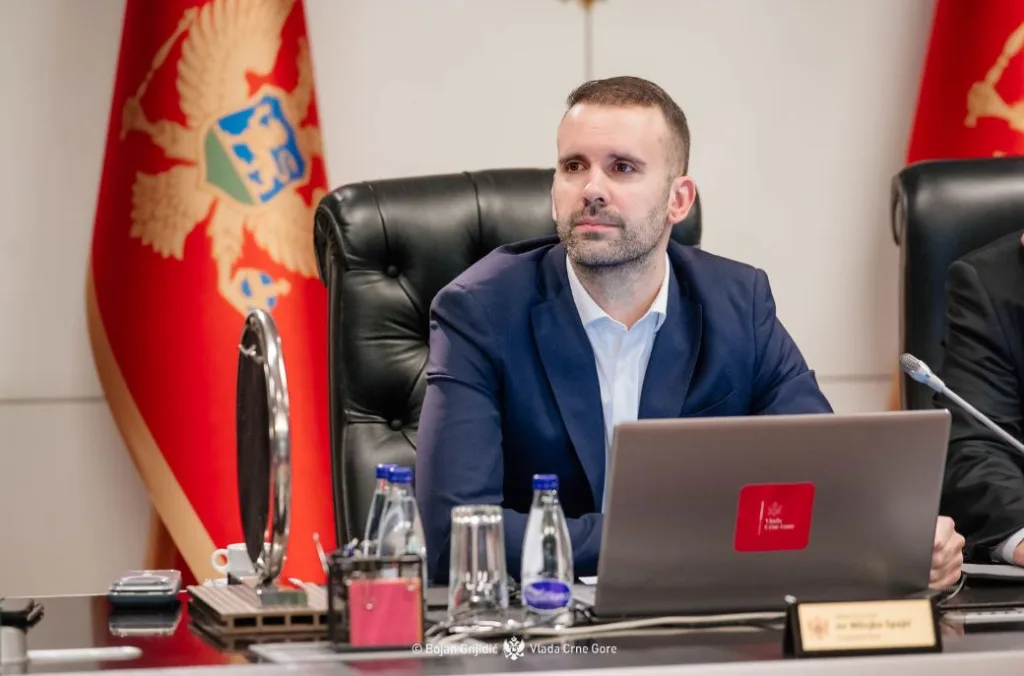
Spajić, who was the keynote speaker at the conference, said that our political systems are based on freedom of expression, media pluralism and the free exchange of ideas.
"These values are the foundation of the European model. But precisely because of this openness, they can also be exploited. Our response must therefore be decisive, while at the same time firmly rooted in the principles that define our democracies. We must defend our democratic processes while preserving the freedoms that give them meaning," Spajić said.
He points out that this requires stronger institutions, greater transparency in the digital information space, and deeper cooperation among countries that share the same democratic values.
"No country can deal with this challenge alone. Information operations today are transnational in nature. Influence campaigns are planned and coordinated far beyond the borders of the countries they seek to influence, but the consequences are felt directly in our domestic political environment. For this reason, only a coordinated European response can effectively face this challenge," the Prime Minister added.
In this context, the Prime Minister emphasized that Montenegro approaches this issue with a clear understanding of both risks and responsibilities.
"As a candidate country aiming to become the next EU member, Montenegro sees the European integration process not only as a diplomatic or technical exercise, but as a transformative project for our society. Our goal is to build stronger democratic institutions, a more resilient state and a society capable of withstanding political and informational pressures. At the same time, we are fully aware that countries on the path to EU membership often become targets of external influence," said Spajic.
He added that the Western Balkans represents a historically complex and geopolitically sensitive region, in which various global actors and those who are against the EU have strong interests in influencing political developments in the region.
"During the process of Montenegro's accession to NATO, the country was exposed to various political and informational influences, which posed challenges to political stability and public discourse. In addition, in 2022, government servers and servers of almost all national institutions were the target of one of the most significant cyberattacks in the country's history. The scale of the attack revealed that the system was not fully prepared to withstand such threats," the Prime Minister recalled.
Spajić also emphasized that the electoral processes in Montenegro also represented a particular area of sensitivity in the context of disinformation campaigns and external influence, emphasizing the need for continued efforts to preserve transparency and public trust.
"These experiences have further emphasized the importance of strengthening institutional resilience, cybersecurity capacities, and overall system readiness. We have learned an important lesson. Foreign manipulation of information rarely aims only for immediate political effects. Its goal is usually long-term democratic erosion," said Spajić.
This is precisely why, as Prime Minister Spajic emphasizes, strengthening democratic resilience has become one of the government's central priorities.
"Our approach rests on three key pillars. First, strengthening institutional capacities for identifying and analyzing coordinated information operations. Second, increasing transparency in the digital information space. Political influence today often operates through anonymous networks, coordinating online campaigns, and opaque forms of digital political advertising. And third, deepening international cooperation. Since FIMI operations are transnational, effective responses must also be transnational," Spajić assessed.
The Prime Minister concludes that the strength of democratic societies lies in their ability to build institutions that citizens trust, create transparency in the public sphere, and defend democratic values with confidence and clarity.
"Opposing the manipulation of foreign information is therefore not just about defending our information space. It is about defending democracy itself," Spajić said.







Comments
[…] Spajić iz Brisela: Strano manipulisanje strateško oružje protiv demokratije […]