
The Government of Montenegro has adopted maximum measures to limit fuel prices and reduced excise duties on fuel by 50 percent and shortened the calculation period from fifteen to seven days. This means that the price of diesel will increase by only 4 cents instead of 31 cents and will amount to 1.54 e from Tuesday instead of the expected 1.81. A liter of gasoline will cost 1.51 e instead of 1.68 e.

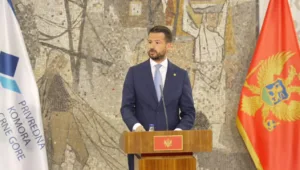
"This was a completely justified and expected decision and it seems that it was the last moment to make it because if it had not been made, we would have had a situation where next week we would have a sudden increase in prices, which would threaten the living standards of citizens and raise the costs of business entities," Mulešković told TVPG.
Objasnio je da ta odluka Vlade predstavlja mjeru koja može privremeno dovesti do stabilizacije cijena.
"We must monitor the situation on the world market because the fact is that in a few weeks fuel prices have increased by almost 30 percent and that the conflicts in the Middle East are not ending, which means that their economic consequences will be increasingly severe not only for Montenegro, but for all countries," added Mulešković.
He warns that rising fuel prices could lead to an increase in the cost of transportation at the global level, which would lead to an increase in the price of basic foodstuffs, and this would undoubtedly affect Montenegro as an import-dependent country.
Mulešković added that Montenegro must pay special attention to the impact of rising oil and oil derivatives prices on tourism, as a fuel price hike could increase transportation costs and cause cancellations of guest arrivals.
"This is a commendable decision that we should have heard earlier. It is important that we have a stable supply to the market, but that we now have to act responsibly in terms of consumption because restrictions have already been introduced in some countries," said Mulešković.
It indicates that the situation on the international oil market will definitely lead to price increases.
"If fuel prices stabilize, the growth will not be drastic, but at this point this was the only decision the Government could make. Now it is up to them to think about where to replace the revenues that will be reduced. This crisis has also shown the shortcomings of our budget, because the dominant revenues are those related to indirect taxes, namely VAT and excise duties. This is precisely where we need to expand the tax base and work much harder on diversifying revenues so that situations like this do not cause problems for the state treasury in the future," concluded Mulešković.