
"By systematizing key indicators relevant for monitoring gender equality in different sectors, the Catalogue aims to facilitate the work of those institutions that generate, manage and analyse data important for the development of gender-sensitive public policies. The document, developed by experts engaged by the Mission, Prof. Olivera Komar and Dr. Slaven Živković, will enable easier access to public information, improve the quality of analysis and public policies and contribute to equal opportunities for women and men. The Catalogue will be available on the website of the General Secretariat of the Government," they said in a statement.
During the presentation of the Catalogue, Acting Assistant Secretary General of the Government Almedina Vukić said that integrating a gender perspective into public policies is not possible without the use of sex-disaggregated data. "That is precisely why it was important to create a Catalogue that provides an overview of available data that can be used in creating public policies. Improving the system of data-based policy planning is one of the key competencies of the Secretariat General of the Government, and such a Catalogue enables this," said Vukić.

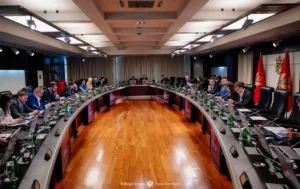
Head of the Department for Gender Equality Affairs at the Ministry of Human and Minority Rights, Biljana Pejović, said: "Gender-disaggregated data are not just statistics - they are a tool that allows us to see real differences in the position of women and men, to identify inequalities and to create measures that yield concrete results."
Since 2023, the Mission has been supporting the Ministry of Human and Minority Rights and the General Secretariat of the Government of Montenegro in improving the methodological framework for the development and monitoring of public policies through the integration of a gender perspective. This catalogue represents a step towards sustainable use of data and strengthening institutional cooperation.
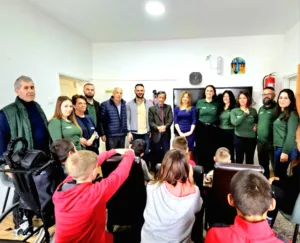
At the same time, in addition to supporting the strengthening of state institutions at the national level to collect, use and share gender-disaggregated data, the Mission supported the Municipality of Bijelo Polje in upgrading the e-Office software to include gender-disaggregated data. The e-Office, the key system for maintaining administrative records in local government, now allows for gender recording during data entry, which further enables the systematic collection of sex-disaggregated data. The improved software will contribute to more efficient management of administrative processes, as well as the creation of policies based on reliable data, provided that such data is effectively used to promote equality and better understand the needs of citizens.
The Mission remains committed to supporting national and local institutions in Montenegro in strengthening their capacity for inclusive and gender-responsive governance.