
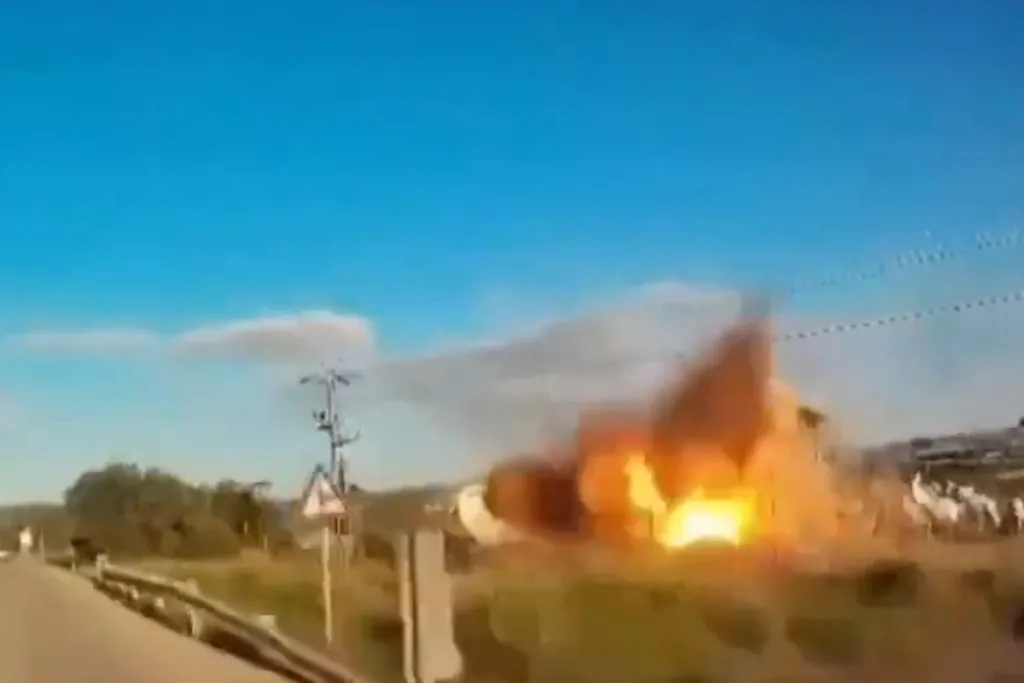
Israeli media reported that at least one Iranian missile landed near Beit Shemesh, located west of Jerusalem, causing residents to flee to shelters as air raid sirens wailed in several neighborhoods.
The IRGC's Public Relations Department issued a statement detailing the operation, identified as the 35th wave of the "True Promise 4" campaign, which involved multiple strategic missile systems, including the Fatah, Emad, Kheir Shekan, Khorramshahr and Quadr missiles.
The attacks represent Tehran's latest response to a joint US-Israeli military offensive that began on February 28, which has so far claimed more than 1,200 lives and injured approximately 10,000 people across the region.
Rocket lands near Jerusalem
According to the daily newspaper Israel Hayom, the missile that struck near Beit Shemesh fell in an uninhabited area, causing no immediate casualties. However, the incident caused widespread alarm, with sirens sounding across the Jerusalem region and the Israeli coastal plain after incoming missiles were detected.
The moment when Hezbollah’s missile landed on Israeli SATCOM intelligence gathering site near Jerusalem.
— Dr. Syed Mohd Murtaza Murtaza (@syedmohdmurtaza) March 10, 2026
The reality is that Israel cannot counter even a force like Hezbollah, leave alone Iran. Without US, Iran will grind the IDF into pieces. It is already struggling against… pic.twitter.com/dog0tJSMZ3
Israeli police said their forces, along with border police and bomb disposal units, were conducting extensive searches across the Jerusalem district for debris and unexploded missiles. At the same time, sirens were also activated in the Haifa region in northern Israel after separate rocket launches from Lebanese territory.
Regional conflict is spreading
Tuesday's missile strikes mark a significant escalation in the escalating regional conflict, in which Iran has launched retaliatory drone and missile strikes not only on Israel, but also on Jordan, Iraq and Gulf states where US military units are based. Israel has also expanded its military operations against Hezbollah in Lebanon, opening up multiple fronts in the conflict.
Turkey continues to closely monitor these developments as the instability threatens to further destabilize the Middle East, potentially drawing in neighboring countries and disrupting critical energy supplies flowing through the region, reports "YeniSafak„.








Comments