
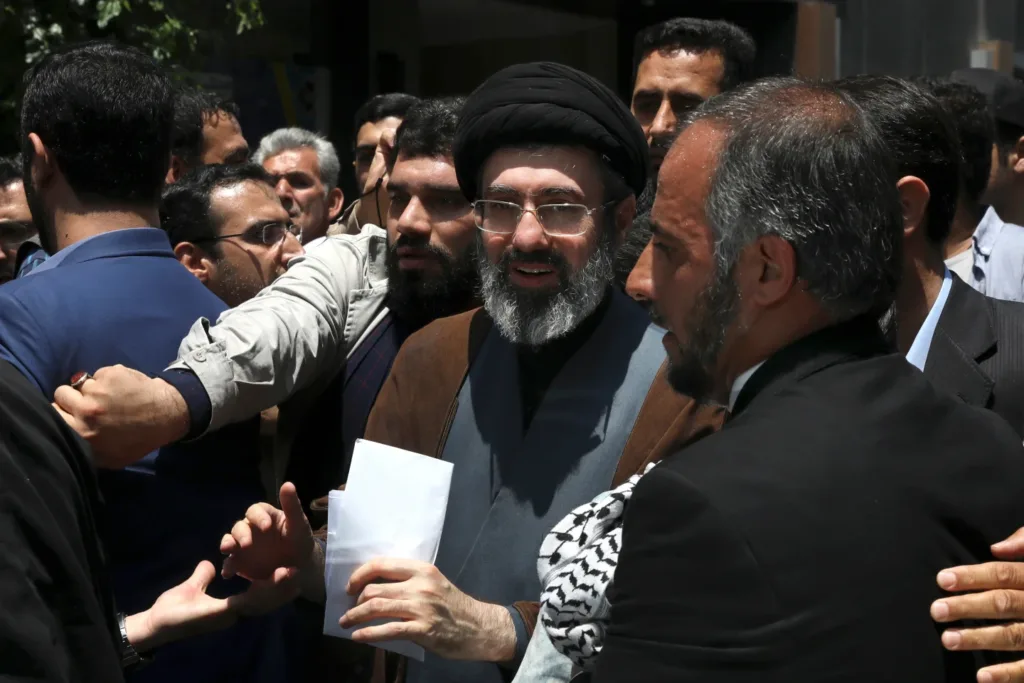
The document stated that Khamenei was unconscious and in serious medical condition following an airstrike that killed his father, longtime Iranian Supreme Leader Ali Khamenei.
According to the memorandum, the younger Khamenei is receiving treatment in Qom, one of the most important religious centers of Shiite Islam in Iran, and is not involved in decision-making at the state level.
The same document also states that Ali Khamenei's body is being prepared for burial, while intelligence services have observed preparations for the construction of a large mausoleum in Qom with multiple tombs, which could indicate a plan to bury other family members in the same place.
Information about the younger Khamenei's location, according to the memorandum, has been known to American and Israeli intelligence services for some time, but had not previously been made public.
Iranian authorities earlier confirmed that Mojtaba Khamenei was wounded in the same attack that reportedly killed his father, mother and wife. He has not been seen in public since the conflict began, although he was chosen as his father's successor in early March.
Iranian state television, meanwhile, broadcast two written statements attributed to the new supreme leader, as well as an artificial intelligence-generated video purportedly showing him analyzing a map of the Israeli nuclear facility in Dimona.
Allegations about his health have further fueled speculation that the Islamic Revolutionary Guard Corps could have real control over the state, while Khamenei would formally remain at the head of state.
US President Donald Trump said Washington was negotiating with other Iranian officials, but that the talks did not include the supreme leader.
Iranian media also reported that Ali Khamenei's funeral could be held in his hometown of Mashhad, one of the largest Shiite pilgrimage centers, while a public commemoration is expected in Tehran, although the date has not yet been announced.
Wednesday will mark 40 days since Ali Khamenei's death on February 28, which would mark the end of the traditional period of mourning in Shiite Islam.






Comments