
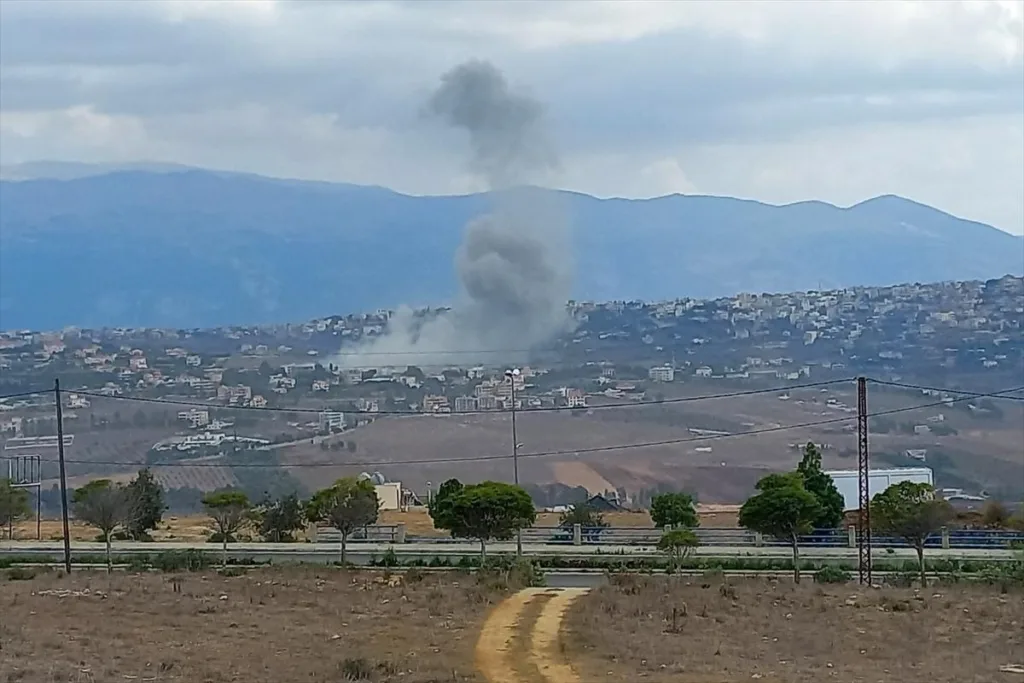
- After Lebanese authorities said at least 303 people were killed and 1,150 wounded in Israeli airstrikes across the country on Wednesday alone, Benjamin Netanyahu said he would begin talks with the government in Beirut "as soon as possible." He said the talks would "focus on disarming Hezbollah and establishing peaceful relations between Israel and Lebanon."
- An unnamed source told CNN that Netanyahu's decision came from US President Donald Trump and stressed that the negotiations will take place without a ceasefire, meaning that military operations will not cease.
- On the other hand, Lebanese authorities are seeking an “Iranian model” for potential negotiations. They say it would be a “separate path, but the same model,” including the fragile ceasefire between the US and Iran, which was brokered by Pakistan.
- Meanwhile, Reuters reported that the State Department will host a meeting next week to discuss a ceasefire between Israel and Lebanon.
- US President Donald Trump told NBC News that he was "very optimistic" and that a peace deal with Iran was "within reach," as a diplomatic delegation led by US Vice President J.D. Vance prepared to travel to Pakistan this weekend for talks aimed at ending the war.
- Said Hatibzadeh, Iran's deputy foreign minister, says the Strait of Hormuz is open, noting that Tehran is committed to peace in the Middle East but is skeptical of "the other side."
- A message from Supreme Leader Mojtaba Khamenei said Iran would "bring management of the Strait of Hormuz into a new phase," without providing details.
- The announcement, carried by local media, states that the regime in Tehran will seek compensation "for all damages and injuries in this war."
07:06
Netanyahu: There is no ceasefire in Lebanon, we continue with attacks
Israeli Prime Minister Benjamin Netanyahu said last night that "there is no ceasefire in Lebanon" and that Israel continues to attack Hezbollah.
In a video message to residents of northern Israel, he said that Israel "continues to strike Hezbollah with great force" and will not stop until it restores their security.
"Our significant achievements, both in Iran and against the axis of evil, have led to a historic change in Israel's position in the region. They have also led to changes in our relations with countries with which we previously had no relations," Netanyahu said.
The Israeli prime minister said earlier yesterday that he had instructed the government to begin direct talks with Lebanon as soon as possible. He said the talks would focus on disarming Hezbollah and establishing peaceful relations between Israel and Lebanon.
Lebanese officials have requested a temporary ceasefire to allow for negotiations with Israel.
07:04
Trump and Starmer agree on free passage through the Strait of Hormuz
US President Donald Trump and British Prime Minister Keir Starmer stressed the need to restore freedom of navigation in the Strait of Hormuz during a phone call on Thursday, Starmer's office announced last night.
The statement said a new phase had begun in finding a solution to unblock the Strait of Hormuz. It said Starmer spoke to Trump from Qatar, and relayed his discussions with Gulf leaders on the need to restore freedom of navigation in the Strait of Hormuz, as well as the UK's efforts to bring partners together to agree a sustainable plan.
Trump and Starmer reportedly agreed to hold another phone call soon. Iranian Deputy Foreign Minister Saeed Hatibzadeh said yesterday that the Strait of Hormuz was open, noting that Iran was committed to peace in the Middle East but was skeptical of "the other side."
07:03
Iran denies reports of negotiating team arriving in Islamabad
Media reports about the arrival of an Iranian negotiating team in Islamabad for talks with the United States are incorrect, a source in Tehran told the Tasnim news agency.
He also stressed that negotiations remain suspended until the US fulfills its commitment to a ceasefire in Lebanon and while, as he stated, the "Zionist regime" continues its attacks.
United States President Donald Trump said on Thursday that he is "very optimistic" that a peace deal with Iran is possible.
06:59
Trump: Iran is mismanaging Hormuz, that's not how we agreed
United States President Donald Trump has accused Iran of doing a "very bad job" and behaving "dishonestly" in managing the passage of oil through the Strait of Hormuz, saying that this is not in accordance with the agreement that, he claims, exists between the parties.
Trump said yesterday that Iran should not charge fees to tankers passing through the Strait of Hormuz.
"They better not do it, and if they do, they better stop it now," Trump said at the time.
White House spokeswoman Caroline Leavitt said Trump had floated the idea that the US could make money from ships passing through the Strait of Hormuz by charging a fee for passage, stressing that it was a topic that would be discussed in the coming days.




Comments