
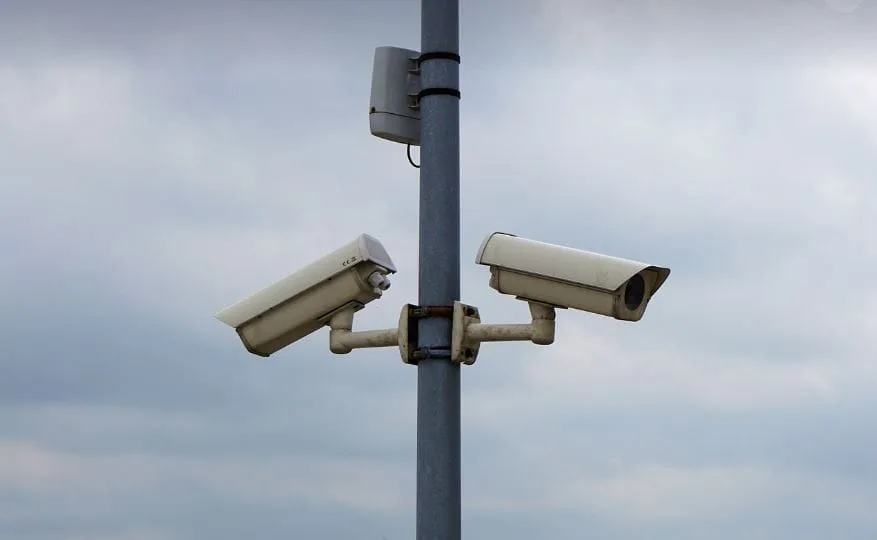
RTCG's interlocutors say that there should be clearly prescribed conditions for someone to be on the "watch" list.
Internal records of persons, organizations, vehicles or other entities that competent authorities specifically monitor due to potential security or criminal risks, or the so-called national "watch" list, can be a good tool in the fight against terrorism and other forms of crime. This is the opinion of Ivan Pekić, a master of security sciences.
"The "Watch" list enables rapid data exchange and reduces information fragmentation between agencies, which is truly commendable. In this way, if a certain person or object is on the list of one institution, other institutions can immediately receive a warning and react in accordance with their jurisdiction. In addition, the list allows for faster identification of potential security threats, especially in situations such as border controls, airports and police checks," says Pekić.
Information exchange would contribute to the interoperability of the security sector not only at the national, but also at the international level, Pekić points out.
However, the full effect depends on the technical integration of the system and clearly defined legal frameworks, i.e. data protection and regular updating of information.
"From the perspective of our citizens in Montenegro, the use of the 'watch' list can be problematic and subject to criticism," he said.
He adds that, first of all, there is a risk of privacy violations, because such lists involve the collection and exchange of a large amount of personal data between different institutions.
"If the legal framework and oversight are not clear and transparent enough, data can be misused or used beyond its original purpose. There is also a risk of misidentification, i.e. situations where a person is mistakenly included on the list due to a similar first or last name, incorrect data or incorrect information," says Pekić.
The criminologist agrees. Velimir Rakocevic, emphasizing that, thanks to the national list, security is being raised to a higher level.
However, Rakočević points out that even the most modern mechanism, if misused, can turn into its opposite.
"So, in principle, I don't see anything controversial here because it is probably in all of our interests that security is at the highest possible level, but it is very important that the method of using this list and the rules that are very clearly defined in modern states are fully respected," says Rakočević.
As a reminder, reasons for being placed on the "watch" list may include suspicion of organized crime, links to terrorism, international arrest warrants, or a potential security risk.







Comments