
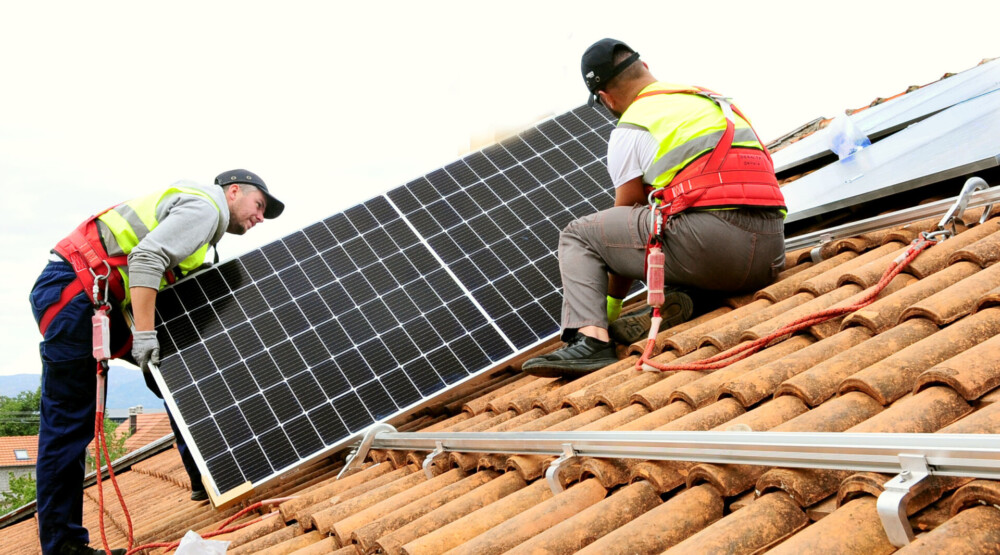
While experts point to a large untapped potential, the state says the legal framework is ready for investment and reform. And a new study shows that solar and wind projects could significantly increase electricity production while preserving nature.
The energy balance of Montenegro in the past period is characterized by a high dependence on production from the Piva and Perućica hydroelectric power plants, thermal power plants, with significant electricity imports. Montenegro strives for decarbonization and an increase in the share of renewable energy sources in accordance with European regulations. Economic analyst Predrag Zečević reminds that Montenegro has a large hydro potential and large coal reserves that have not been fully utilized.
"It is not wise for Montenegro to give up on thermal springs, especially because it has such enormous wealth. So, it is absolutely clear that we should first use hydropower and thermal energy, and only then solar energy and wind energy. Montenegro simply meets about 70% of its needs even with green energy," he said.
State Secretary at the Ministry of Energy, Matija Medojević, says that all necessary legislation for the development of renewable energy sources has been adopted and, as he points out, an environment is being created for investments and accelerated energy reform.
"Our reform agenda is focused on further improving this framework with a special emphasis on creating a stable and predictable environment for investors and accelerating the energy transition," said Medojević.
The MEGA study, conducted by Eco Team and the Global Organization for Conservation of Nature, has mapped for the first time locations for wind and solar power plants for the energy sector while preserving nature. The goal is to positively impact the ecological and climate crisis while preserving plant and animal life.
"The analysis shows that in locations with minimal conflicts it is possible to develop projects whose annual production could reach over 21 terawatt hours, which is as much as six times more than the current annual electricity production," says Eco Team representative Milija Čabarkapa.
The entire project involved the local community, and new methods of collecting data from the field were used, said energy expert Zoran Miljanić.
"Which, in addition to those, let's say, raw potentials, also treats some logistical and technical, let's say, network, infrastructure criteria, plus of course what has never been treated before, and that is the impact on other uses of space. Those inputs, georeferenced inputs related to that, were not available during the preparation of the study. We were already working with what are officially prescribed uses of space," he said.
The accession of the Montenegrin energy system to the European Community will mean a more stable energy sector as well as greater electricity exports via submarine cable.





Comments