"A child who realizes, and you know how smart children are, and very quickly realizes that someone is trading with them, that someone is presenting them as goods, or that they want to get something from them, then they make such calculations in their own heads, then they set up exchanges in their own heads, and then they grow into people who do not decide based on their heart and love, but decide based on what I will get, where, how," the psychologist stated. Radmila Stupar Đurišić.
While experts warn against emotional abuse, in practice the issue of intimate partner violence is often intertwined with the role of parent. The Center for Women's Rights points out that manipulation is often used as an extension of the control that the abusive partner has established during the relationship.


"If someone was violent towards a mother in the presence of a child, we cannot treat them as a good parent. I think that by reducing the problem of violence to a family conflict, we miss the opportunity to actually work in the best interest of the child, because a woman is put on a double burden. She is expected to protect the child, and at the same time, she is expected to establish good communication with the person from whom she has already sought protection, which was not possible," she emphasized. Anita Jaredic from the Central Railway.
On the other hand, from the perspective of fathers, the problem is seen in the institutional favoritism towards mothers. They emphasize that the case law, which in most cases awards custody to women, creates space for abuse of power within the system.
"We have a situation where the Monstat data says that when it comes to families, the number of households and so on in that segment, 22% of children live with their fathers, 22.8% while 77.2% live with their mothers. The difference here is that when children reach the age of 15 or earlier, they can already declare which parent they want to live with at the age of 10, or they can choose their own opinion at the age of 15," he said. Bojan Vujovic from CZMP.
The discord between parents further deepens the distrust in the work of social work centers, warns Đurišić.
"Those parents who are ready and who want to abuse their child, for them the system is just a big enemy, someone who can get themselves into big trouble. So I can only tell you that I have been in trouble many times when I noticed and tried to fight against it, and I also know many colleagues who have even given up on helping those children because they see that the claws of the parents who have surrounded that child are so deeply rooted that you can only hurt yourself and your family," says Stupar-Đurišić.
The Center for Women's Rights sees the filing of false reports against the mother or "buying" the child's affection through excessive indulgence as an additional problem.
"One type of manipulation is filing charges against the mother for violence against children. This further complicates her situation because she is then forced to simultaneously fight through these court proceedings for custody but also to prove to the institutions that she was not violent," Jaredić pointed out.
On the other hand, the Center for Men's Rights points out that the social narrative rarely criticizes the maternal figure, even when the shortcomings are obvious, and that it has become the practice to speak about fathers in a negative context.
"Mothers are never criticized, mothers are never talked about in a bad context, that's only about fathers. They often abuse their children by using them as weapons to hurt their husbands, but that's definitely not in the children's best interest. In general, this tension also affects the health of children, their formation through healthy personalities," Vujović points out.
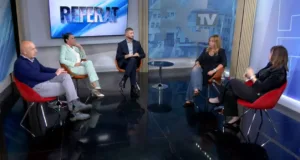
However, everyone agrees on one thing - the biggest losers remain children who grow up in an atmosphere of blackmail and lack of empathy. Although society has become more sensitive to this problem, the solution does not lie only in court rulings, but in the willingness of parents to end their personal wars where their children's childhood begins, say the interlocutors of Television Podgorica.