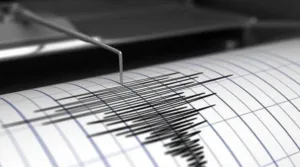
Kako ističe za Portal RTCG, projektovanje bez adekvatne seizmičke karakterizacije tla nije racionalno upravljanje rizikom, već odlaganje i zanemarivanje posljedica koje u Crnoj Gori koja je trusno područje, mogu biti nenadoknadive.
Kako je naglasio Glavatović nedavnim izmjenama Zakona o geološkim istraživanjima u Crnoj Gori praktično je ukinuta obaveza investitora da sprovode geofizička ispitivanja na lokaciji budućih građevinskih objekata.


„U zemlji smještenoj u izrazito seizmički aktivnom području, o čemu svjedoči katastrofalni zemljotres iz 1979. godine, kao i brojni raniji i kasniji seizmički događaji, takva normativna intervencija može imati dugoročne i sistemske posljedice po sigurnost građenih objekata, građana i društva u cjelini. Ovdje nije riječ o administrativnom pitanju i tehničkom pojednostavljenju procedure, već o suštinski bitnom elementu kompleksnog i vrlo značajnog procesa seizmički sigurnog projektovanja na prostoru gdje seizmički hazard nije teorijska kategorija, nego stalna geodinamička realnost“, navodi Glavatović.
Seizmička sigurnost, kako ističe dugogodišnji direktor Seizmološkog zavoda Crne Gore, počinje razumijevanjem tla – podloge objekta na kojoj gradimo i ako se taj korak zanemari, svaka naredna faza projektovanja zasniva se na pretpostavci umjesto na znanju.
Pitanje da li je stručna javnost bila produktivna ili destruktivna u izradi Predloga zakona
Glavatović ističe da je riječ o Predlogu zakona koji je utvrdila Vlada, a u samom dokumentu je priložen i odgovarajući izvještaj u kojem se saopštava da je javna rasprava obavljena krajem prošle godine u trajanju od 20 dana, kao i da je održan jedan okrugli sto sa tom tematikom.
„Koliko znam, Vlada je krajem januara 2026. utvrdila Predlog ovog zakona, a u martu je taj Predlog evidentiran u Skupštini. Ovo upravo znači da je formalno stručna javnost bila uključena, ali ostaje otvoreno pitanje da li je njen uticaj bio produktivan ili destruktivan, posebno ako se zna da je iz konačnog teksta Nacrta nestala jasna norma o obaveznim geofizičkim ispitivanjima, jer je na taj način izbačena obavezna osnova za utvrđivanje projektnih seizmičkih parametra lokacije objekata“, ističe Glavatović.
Seismic safety, as he says, is not a private matter for investors and cannot be the sole private interest of investors. "Seismic safety is a significant issue of public interest that is contained in the first place - in the safety of citizens. When a building is damaged in an earthquake, the investor bears only the financial consequences (if he is still the owner of the building or has already sold it on the market), but far greater, often irreparable damage (unfortunately, often victims) is borne by the tenants of these buildings, that is, the owners of the apartments, then the neighbors in the vicinity of the endangered building, public infrastructure, security services, as well as society as a whole. The new owner (buyer) of the apartment is almost never aware of the fact that such a building was not adequately designed for the effects of an earthquake. After negative experiences, the realization is dysfunctional and unfortunately - often bitter. Unfortunately, we still have fresh memories of the tragic events of 1979. Therefore, these issues must not remain at the level of the investor's free assessment. The state must regulate this with this law," Glavatović is categorical.
The bill does not require mandatory soil testing for seismic parameters.
He adds that the key problem with the new solution is that Article 11 of the Law still requires "mandatory detailed geological surveys of soil and rocks" for a very wide range of facilities, including single-family residential buildings, apartment buildings and commercial buildings, but the text no longer contains a specific norm that would require geophysical soil surveys to determine the design seismic parameters of the location.
The Draft (and Proposal) of the Law in its current version formally mentions the determination of the seismic properties of the soil – in a general form, but does not specifically insist on geophysical surveys as a mandatory basis for the design seismic parameters of the location. In this way, it is left to the 'good will' of the investor to decide on the possible performance of such surveys. Obviously, this is a significant omission in the current version of the Proposal of the Law, because the public interest and safety of citizens must not rest on the 'good will' of the investor.
"This opens up the possibility of only carrying out 'geological' research in the narrow sense (geotechnical) in practice, without the part that is crucial for seismically safe design. It should be understood that in this law the term 'geological research' does not explicitly include geophysical research, which is intensively misused in practice. Namely, it is necessary to clearly state in which cases geophysical research and the determination of seismic parameters of a location are mandatory. This definition actually contains an important difference between the formal and actual seismic safety of people and objects in seismic conditions," explains Glavatović.
He emphasizes that seismic design standards must be respected in our country as well. Eurocode 1998, together with other parts of EN90 - 97 and national annexes, was prepared in Montenegro back in 2015, and in 2021 the relevant ministry made a decision on its mandatory application for the design of buildings - as the MEST EN1998 standard.
This standard, says Glavatović, explicitly links the design parameters of the structure to the characteristics of the soil.
"It is obvious that this standard cannot be responsibly applied without reliable data on local soil. The Draft (and Proposal) of the Law in its current version formally mentions the determination of seismic properties of the soil - in a general form, but does not specifically insist on geophysical surveys as a mandatory basis for the design seismic parameters of the location. In this way, it is left to the 'good will' of the investor to decide on the possible performance of such surveys. This is obviously a significant omission in the current version of the Proposal of the Law, because the public interest and safety of citizens must not rest on the 'good will' of the investor," Glavatović emphasizes.
Transferring risk from the state to individuals and investors
With the current solutions in the Draft Law, he adds, there is definitely a danger that a large part of the risk will be transferred from the state and the control system - to designers, investors, but most importantly - to the end users of the facilities.
"When the law is no longer completely clear regarding mandatory testing methods, space opens up for different interpretations and for degrading the level of safety - primarily for citizens. In essence, only the investor achieves savings on research with the described solution, but it is minor and short-term - regularly amounts to less than one per thousand of the value of the object, while the cost of an error in a seismically active area, such as the largest part of the territory of Montenegro - can be enormous: much greater damage, many times more expensive rehabilitation, irreparable lost human lives," Glavatović points out.
It is dangerous for homeowners to guarantee that their building is seismically safe.
When asked how dangerous it is that the Law on Legalization allows private owners to guarantee the safety of buildings up to 200 square meters, Glavatović points out that it can be very dangerous.
"A statement by the owner of a building that "the building is seismically safe" can in no way replace an expert assessment of the structure and soil. In a country with high seismic hazard, such as Montenegro, seismic safety must not be reduced to a personal statement by the investor or owner, given that in that role they represent persons interested in minimizing investments, without taking into account the consequences," the engineer emphasizes.
In his opinion, state authorities have not sufficiently monitored how and where construction is taking place, because if today we have facilities and zones that raise serious doubts regarding the quality of the soil, stability and construction conditions, this indicates that control of the space and the quality of construction has been inadequate for years.
In the event of a stronger earthquake, which is unfortunately inevitable in our area, the consequences can be multiple: a greater number of severely damaged buildings, more landslides, rockfalls, subsidence, higher repair costs and more severe consequences - especially on our coast, where the seismic risk, but also the pressure on construction, is greatest.
"Such examples warn that soil characteristics were often not taken into account sufficiently, as is the case now. On the occasion of the 47th anniversary of the devastating earthquake in 1979, it should be remembered that at that time - precisely in such buildings in Montenegro - 101 people died, with over a thousand citizens injured, and around 64,000 buildings were severely damaged. In the event of a stronger earthquake, which is unfortunately an inevitability in our area, the consequences can be multiple: a greater number of severely damaged buildings, more landslides, rockfalls, subsidence, higher rehabilitation costs and more severe consequences - especially on our coast, where the seismic risk, but also the pressure of construction, is the greatest," Glavatović points out.
Urgent changes needed, the law must be revised
It states that three things need to be done urgently: restore to the Law the explicit obligation of geophysical soil testing to determine the design seismic parameters of the location; precisely prescribe the minimum scope of research by type of facility and strengthen control of design, revision and construction, especially on the coast and in zones of complex geological conditions at the locations of such facilities.
When it comes to earthquakes, any assumption can become expensive, and as Glavatović emphasizes, this requires a strong commitment to revise and harmonize inadequate normative solutions in the new version of the Law on Geological Exploration with European legislative practice.