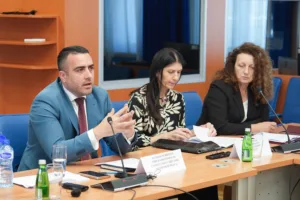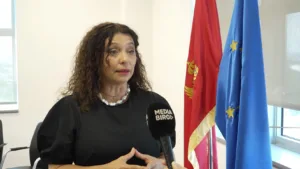
Former diplomat Miodrag Lekic He said that there are many unknowns about how far it will spread, what the outcome of the war with Iran will be, and that no precise plan has been made, because it is not understood what the original goal is.
"It is obvious that Iran is underestimated militarily. It is not defeated, it is fighting back, even surprising. It is not known whether the goal is to destroy facilities or to change the regime. If it is to change the regime, that is much more difficult," he said.
He points out that there are many more questions than certainties about how the war will go.
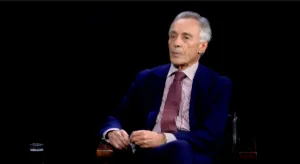

"The question is whether democracy can be achieved with bombs. In any case, America has entered a new adventure. Something we have already seen is being repeated, as if nothing has been learned from the wars in Iraq, Afghanistan, Syria, where chaos was created, where military defeat was experienced. Now they have entered a bigger adventure," says Lekić.
No one has any nostalgia or regret if the system in Iran, which is autocratic, repressive, and extremely religious, changes, Lekić says, but, as he says, the question of "unfortunate" international law arises: can the head of a sovereign, autocratic country that is a member of the UN be eliminated and killed?
"This is a war that is spreading and has reached the EU, which is a particular alarm," said Lekić.
Economic analyst Predrag Drecun He says that we are far from conflict, but that we should try not to divide ourselves into who is for Trump and who is for Iran because we have a vulnerable economy.
"We are far away, but the weapons have a long range and a missile could go astray if we were to commit a foul in the entire international 'injustice'," he said.
He points out that the economic consequences will certainly be felt in Montenegro.
"The negative consequences will be felt primarily through the price of energy. We are also dependent on food imports. If this were to last for more than three months, a barrel could go up to 150 euros. The Strait also affects the price of insurance and transport. As of Monday, the price of fuel in Montenegro will be 7.8 cents higher. I don't know if we can directly link that to this crisis, but I'm afraid that something like this will continue," said Drecun.
He explained that this has certain effects.
"You have energy, repercussions on the public budget and finances, repercussions on tourism and trade, on logistics, investments. Finally, on the euro exchange rate against the dollar. Depending on the duration of the conflict, there could be a budget deficit in the short term, which would be up to 50 million, but if it were prolonged, it could be significantly more," he explained.
How long the war will last, in Drecun's opinion, depends on whether it is waged against the regime or the facilities.
Political scientist Aleksandar Cukovic He says that based on what we can see so far, there is reason for some caution, but not for alarm.
"Geographical distance does not necessarily mean separation from the hotbed. However, if we look at the way some important EU states and the EU itself are reacting, we see that we have dissonant tones that we cannot interpret as some kind of dissidence within the EU but as some kind of call for common sense reasoning," he said.