
The lecture will discuss the principles of Yugoslav policy towards Poland within the framework of relations with the Eastern Bloc. The author will, among other things, discuss the extent to which Belgrade's policy towards Warsaw was conditioned by the Soviet factor, how much Leonid Brezhnev influenced the relations of Central European countries towards Yugoslavia, and how the Kremlin and its satellites saw the future of Yugoslavia without Tito. Sokulski will also try to bring closer the extent to which the relations between the two countries were conditioned by the socio-political crises in Poland, as well as Yugoslavia, and will also discuss Polish economic investments in Yugoslavia, with a focus on Montenegro (the Aluminum Plant in Podgorica and the Port of Bar). The issue of Montenegro will also have its place due to the importance of cultural exchange, as well as personalities such as Veljko Bulajić or the popularity of Petar Petrović Njegoš in Poland. The author will also present Polish fascination with Milovan Đilas, whose books were published in samizdat, and Đilas himself collaborated and published articles in "Kultura" - the most important magazine of the Polish political emigration.
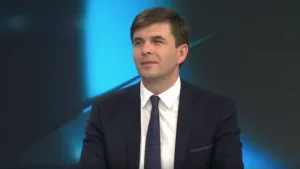
Mateusz Sokulski has been an assistant professor at the University of Silesia in Katowice at the Institute of History since 2017. He deals with the history of Central Europe (primarily the history of Yugoslavia), the history of diplomacy, and democratic opposition to communist regimes in Central and Eastern Europe. He is the author of the book "Poland in Yugoslav Politics 1968–1981 (Polska w polityce Jugosławii w latach 1968-1981)", published in 2024. He is the author of over 20 scientific articles. He was a fellow at Stanford University in the USA in 2022, and a year later a fellow of the Visegrad Fund in Budapest at the Radio Free Europe Archive. He conducted research in Belgrade, Zagreb, and Prague, and participated in numerous scientific conferences in the country and abroad. He won the Second Prize in the competition of the Polish Academy of Sciences and the Institute of National Remembrance in 2018 for his doctoral thesis "Yugoslav-Polish Relations 1970-1980", which he defended in June 2017 at the University of Wrocław.