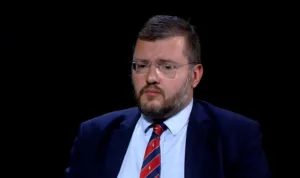
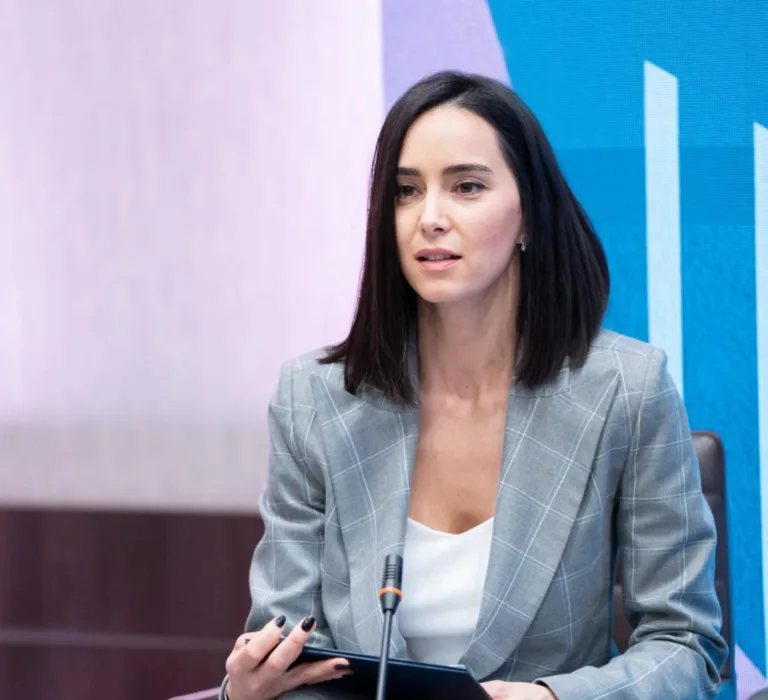
"Although significant legal progress has been made in the past period towards increasing the representation of women in politics, gender equality should not be viewed solely through formal representation, but primarily as a matter of real influence, decision-making power and the possibility of political advancement. In this regard, the findings of our research on the participation of women in local politics in Montenegro, conducted in November 2025, are worrying, as they indicated that female politicians often perceive that women are present in party structures, but not always in the circles in which key political decisions are made. Such findings indicate a gap between formal mechanisms of gender equality and actual power relations within political parties, while at the same time new obstacles to women's political engagement are emerging in the public space," says Darmanović.
Darmanović points out that digital violence against women in politics is becoming an increasingly visible form of political pressure and attempts to discredit them. Patriarchal narratives that once pushed women out of public life are now increasingly reproduced through the digital space in the form of misogynistic comments, disparagement, and public targeting of female politicians.

"It is particularly concerning that, based on the requests for free access to information that we sent to the courts, the prosecutor's office and the Police Directorate in order to obtain data on reports and proceedings related to hate speech against women in politics, i.e. criminal acts committed out of hatred or discrimination based on sex, gender or political activity of women, these institutions stated that they do not have records of such cases. This indicates that attacks that are visible in public space are obviously not recorded as a separate category of gender-based violence against female politicians in public space, but are in practice often qualified as misdemeanors or other acts of lower level responsibility, which contributes to their institutional invisibility," Darmanović emphasizes.
Darmanović points out that increasing quotas to 40% in the Government, on electoral lists and on the boards of state-owned enterprises represents an important step towards formal equality, but quotas alone cannot change the political culture or ensure real equality. Gender equality is not measured only by the number of women in politics, but by their real influence, opportunity for advancement and safety in public spaces.
"Participation in political life represents a fundamental democratic right to participate in public life, which is why no woman should be discouraged from engaging politically due to stereotypes, digital violence, or lack of institutional protection," Darmanović concludes.