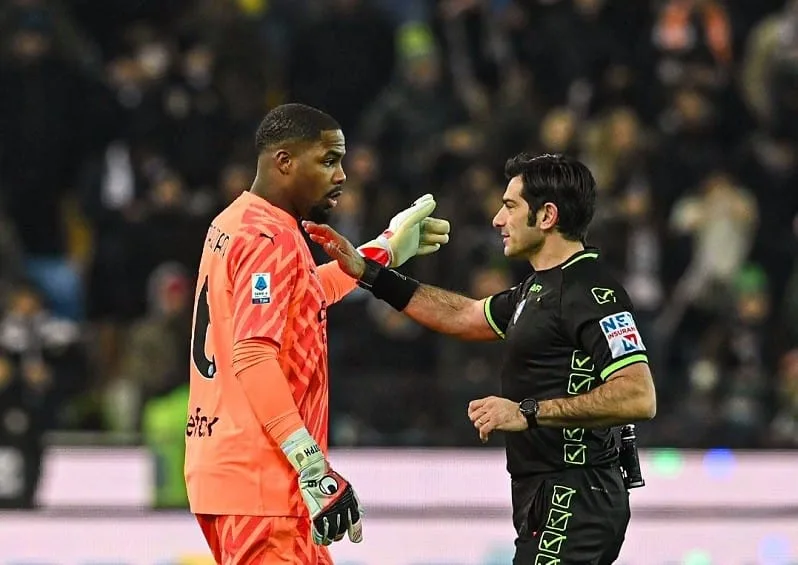
At the San Siro, Milan had everything a serious club could want in the final round. Home ground, an opponent without a score imperative, a second-minute lead, a season without European obligations, and a schedule that left them enough space throughout the year to work, improve, improve, and build. They also had the most important thing: their destiny in their hands.
And then he lost to Cagliari.
Not from Cagliari who were fighting for survival, not from a team for whom every ball was a matter of life and death, but from Cagliari who no longer needed anything essential in the standings. And that's exactly why Milan's defeat is even harder. Cagliari played bravely, honestly and competitively, as if they needed everything.
In a country where the final rounds are often viewed with suspicion, it was a small lesson in professionalism. And, let's be honest, a sentence that should be framed and hung before every final round of the CFL: a game without pressure must not be a game without cheek.
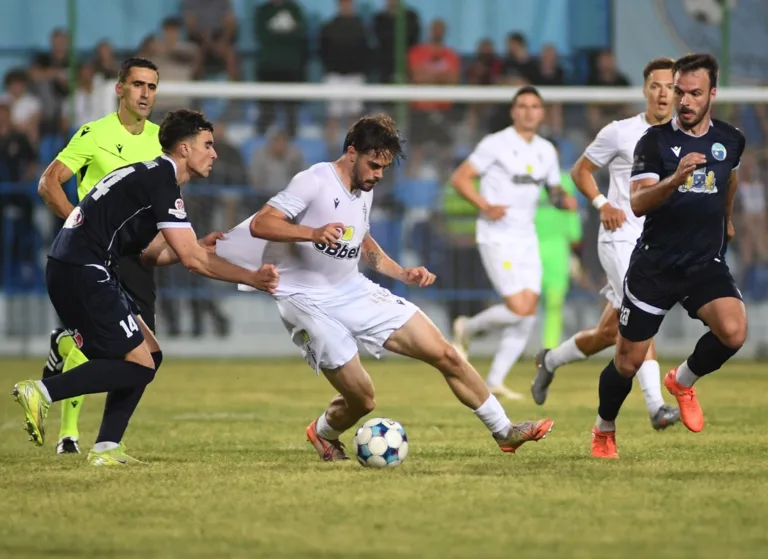
Milan took the lead through Alexis Salemakers, but Cagliari equalized through Gennaro Borelli in the 20th minute, and in the 57th minute Juan Rodriguez headed home for 2:1. From that moment on, San Siro was no longer a stadium pushing its team towards the Champions League, but a courtroom. Massimiliano Allegri, the coach who knows Italian pragmatism best, sat on the bench, but on the most important night of the season, his Milan looked like a team to which neither pragmatism nor quality could give meaning.
And that's why the blow doesn't just go to Allegri, although it goes to him first. His football can be ugly, but it has to be functional. It can be cautious, but it has to be efficient. It can be boring, but it has to bring results. This season Milan didn't play in Europe, it didn't have a Thursday-Sunday rhythm, it didn't live on planes, it didn't waste its legs on away games from Lisbon to Istanbul. It had one game a week and a task that had to be the minimum for a club of its size: returning to the Champions League.
He didn't succeed in that either.
That is why the responsibility cannot rest solely with the coach. Milan is a club that in recent years has too often tried to look smarter than its own history. The owners spoke the language of projects, sustainability, brand and modern sports management, but on the pitch in May, something much simpler was visible: a team without a clear hierarchy, without authority, without continuity and without the kind of hunger that makes the difference when there is no more time for correction. Big clubs can miss the season. The problem is when the miss starts to look like a consequence of the system, and not a coincidence.
While Milan was drowning in their own nerves, Roma did what a big club must do at the “Bentegodi” when they get a chance. It wasn’t easy, it wasn’t clean, it wasn’t without drama, because Roma rarely does anything without drama, but it was enough. Verona was left with a player less, Donyel Malen missed a penalty, and then reacted immediately and scored for 1:0. That detail is probably the best image of Roma’s season: first the heart stops, then the ball ends up in the net.
Malen was powerful when Roma needed him the most. Not just with his goal, but with the energy of a striker who became the solution to many of the “wolves’” attacking problems in the second half of the season. And then in stoppage time, Stefan El Shaarawy’s moment came. Dybala pulled off a counterattack, found space, and El Shaarawy scored for 2-0 and confirmed Roma’s return to the Champions League after eight years. If this was truly his farewell to Roma, it’s hard to think of a better picture: a goal in stoppage time, a place in the Champions League, and another frame in which “Pharaoh” remains part of the romantic, nervous and always slightly exaggerated Roma story.
Roma survived a season in which they seemed ready to trip themselves up at any moment. They survived the setbacks, the pressure, the inner doubts and that eternal feeling that they could never calmly wait until May around the "Olympics". But the final round didn't ask for aesthetics. It only asked for a result. Roma had it.
However, the most beautiful story of this Serie A comes from the lake. Como beat Cremonese 4-1 and turned the season from excellent to historic. Cesc Fabregas' team reached the Champions League not as an exotic episode of Italian football, but as a project that has a head, a tail and a clear football idea. Como is not a fairy tale without money, that would be too simple and incorrect. But it is healthy because money does not look like fireworks for one night, but like fuel for a system that knows what it wants.
Fabregas has built a team that plays bravely, organized and modernly, without complexes in front of either the big or the senior players. Como has acted throughout the season as a club that is growing naturally, albeit quickly.
He did not behave like a tourist in the upper house of Serie A, but like someone who came to stay. The victory in Cremona, with goals from Jesus Rodriguez, Tassos Douvikas and Lucas da Cunha, was the final signature to one of the healthiest stories in European, not only Italian football.
In the end, despite the postponement and fan riots in Turin, the Torino – Juventus derby, that match only has a table significance, that is, whether Juventus will be above or below the "rosoneri".
That's why the last round of Serie A was much more than just the allocation of places for the Champions League.
In him, Milan saw everything they didn't want to admit. That the name doesn't play, that history doesn't defend break-ups, that "San Siro" doesn't score goals on its own, that a season without Europe is not an alibi for fatigue but an indictment when it ends without the Champions League. Allegri lost his basic argument. The owners lost another piece of trust. The players lost the right to hide behind the story of pressure.
Roma saw that even a chaotic club can find a moment of clarity when it has players who know what the weight of the jersey means. Como saw the future and stepped into it immediately.
And Cagliari? Cagliari may have had the least on paper in the whole madness, but it left the most important message. Football is at its fairest when even those who "don't need it" play as if they need everything.